These Walls

“If you are careful, if you use good ingredients, and you don’t take any shortcuts, then you can usually cook something very good. Sometimes it is the only worthwhile product you can salvage from a day: what you make to eat. With writing, I feel, you can have all the right ingredients, give plenty of time and care, and still get nothing. Also true of love. Cooking therefore can keep a person who tries hard sane.”
John Irving, The World According to Garp

I did not write a single word yesterday, but I cooked, and I thought about writing all day. I recently got my cart before my horse as far as writing goes, and I needed to take a step back. I needed to slow down. I needed to right my upended wagon.

I knew a few days in advance that I’d be having some friends over for dinner. I planned the meal, but had neglected my home. I need to fire the maid (me) because she never completes her tasks, and I need to tell the teenager (me. again.) who lives with me to grown up or get her own place. In lieu of those domestic refinements I had one choice: to do it myself. {bear with me, folks.}

I was slightly overwhelmed despite the fact that it wasn’t the President I was entertained, but four of my all-time favorite ladies. These are not the people you need to impress; these are the people who love you regardless. But still.

As I broomed dog hair out of forgotten corners I wondered if I had enough forks for five people. I knew I had enough dinner plates but that I didn’t have enough wine glasses, though my friends don’t mind drinking out of jelly jars. As I did this simple math I realized that in the two years I’ve lived in my little house I have not had more than two people over for dinner at one time, and more often it’s been only one at a time.

Let me be clear. I am not a fan of throwing big parties or the kind of party where you aren’t sure who will show up where the attitude is “the more the merrier.” The last big party I really remember throwing might have been my 1998 wedding, and even then I knew, for the most part, who was going to be there.

As I swept and mopped I realized that two people can be fairly comfortable sitting at the table in my kitchen, but to add a third I have to relocate Lucky’s food and water bowls. How the hell was I going to squeeze five?

Let me be clear on something else. I sort of love my house and sort of hate it. I like my bedroom, and I love my porcelain bathtub and front yard maples. The original hardwood floors in the bedroom and living room are beautiful, but the person who designed and installed my kitchen floor should be incarcerated. It’s too embarrassing to describe—so just trust me—but on more than one occasion I’ve said that if I owned the house I’d rip out the terrible linoleum because a plywood subfloor would be preferable to that hideousness.

I also really hate the walls. I doubt they’ve been painted in the last decade (maybe two) and imagine that the person who chose the dismal, dingy white was probably also the person who choose the dreadful kitchen floor and painted the inserts of the kitchen cabinets cornflower blue, which only further accentuates the institutional white.

The walls show evidence of previous renters mishaps with nails, screws, and wall anchors. Among other things, the pitted walls make it clear that not everyone cares about hitting a stud. I’ve covered most of it with my own art and pictures, but sometimes all I can see is the spaces in between.

Two years? Yes, two years. I’ve lived in this house for two years with a month-to-month lease. There was even a change in ownership, and when the new owners took over I made it clear that a month-to-month lease means a lot to me. I could have painted the interior of my house two years ago, but because I’ve always been one foot out the door I never wanted to invest, you know, an entire weekend and a couple hundred dollars to improve my house.

One more thing I need to make clear: it’s not entirely the walls’ fault. I’ve also not invested much within those walls. I have some nice antiques in my bedroom (NOTE: it’s the same bedroom furniture I had when I was a kid.) but my bed is third-hand. I have a full-size featherbed on a queen size bed, but at least the semi-vintage linens are semi-decent.I love my pillows.

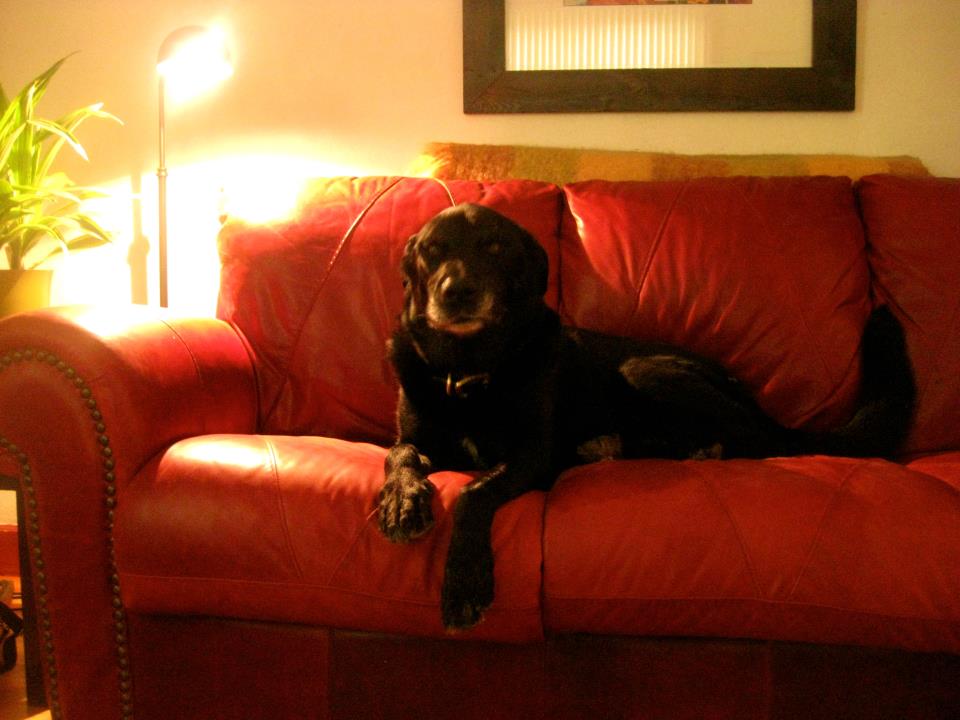
For eighteen months I lived with and loathed a couch that was probably born about the same time I was. It was in great shape as it had been at someone’s lake house—and who sits on a couch when they could sit in a canoe?—but it was not awesome. Not even by a stretch. I finally surrendered seven months ago and bought a nearly new leather couch on craigslist, but only because it was a steal and would be easy to resell, you know, when I move out next month.
Image

When I bought the couch (which was Lucky’s tenth birthday present), I also bought a little writing desk (because it was perfect), and last month bought an $18 mercury glass lamp at T.J. Maxx (because it was a good deal). These purchases were palatable because they can fit in the back of my Subaru without the seats folded down.

I “made” my bookshelves with four wooden boxes and two panels from bi-fold closet doors. I scored all of this stuff at Home Resource for about fifteen bucks, and was so proud of my cool, recycled, “temporary” bookshelves. I actually do like them, and like repurposing discards, but let’s be real: my cherished books deserve something a little classier, or at least more permanent. Or least made of components that most people wouldn’t put in their slash pile.

Image

My kitchen table was snagged from a friend’s yard, and the chairs are vintage aluminum folding chairs from Missoula elementary schools. They have wooden seats, and are as comfortable as mid-century school assembly chairs could possibly be. They were only $3 apiece at Goodwill and I knew they’d be fine for provisional kitchen use, and then, because they fold up, could be retired for “extra” seating.

And then “all of a sudden” I’m having four beloved people over for dinner and not exactly sure where to put them. The only option was to relocate the dog bed and move the kitchen table into the living room, because pulling it into the middle of the kitchen would compromise my ability to open the oven or move with reasonable ease around the room.

After I finished wrangling the dog hair I made the switch. I set the table with my wedding china, napkins brought home from Guatemala eleven years ago, and, after a lot of hunting in my sans-organizer silverware drawer, five mismatched forks and knives. And what do you know: it worked.

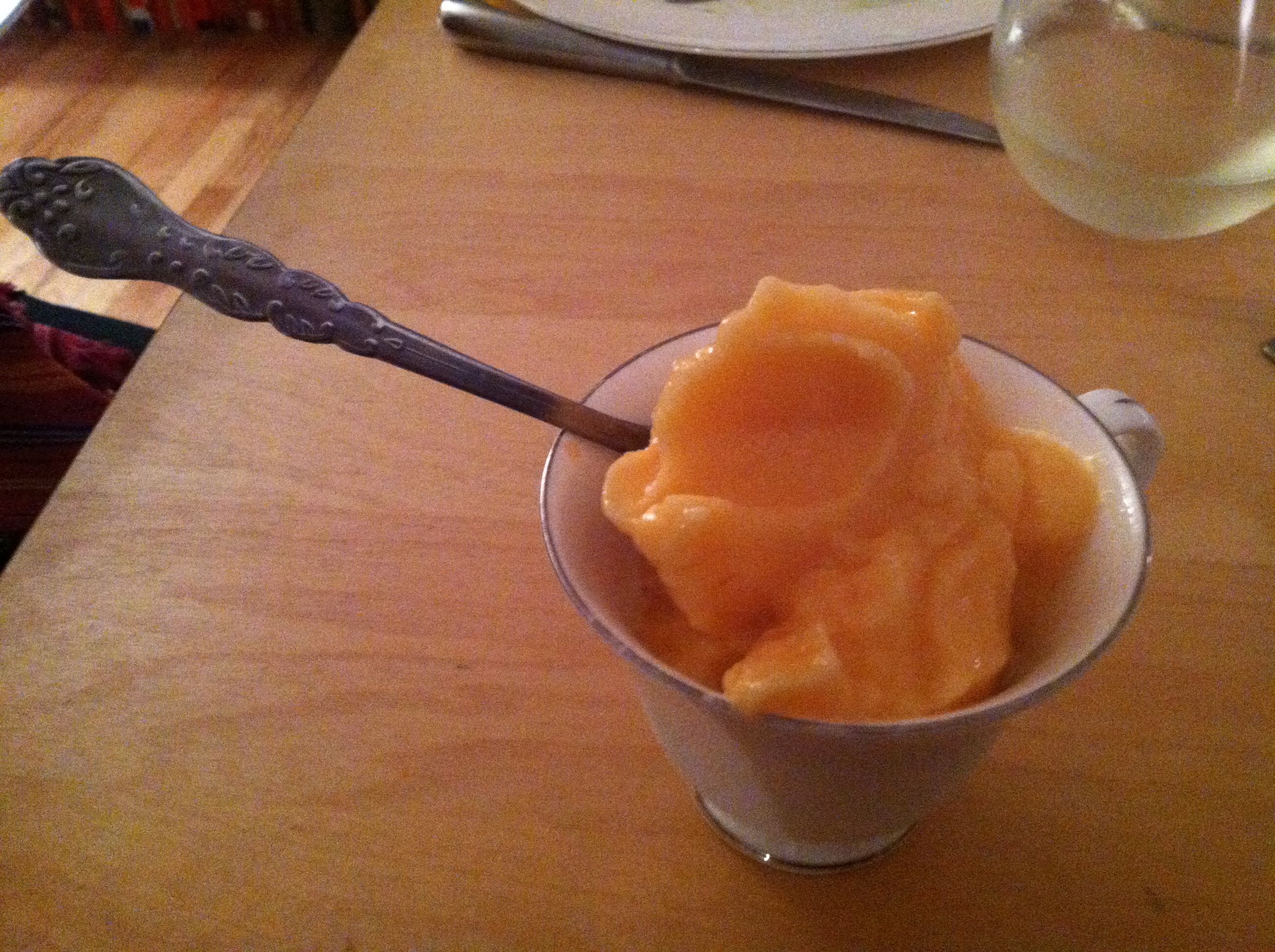
I spent a lot of the day preparing the meal. I went to one farm stand and two grocery stores for my ingredients. I squeezed lemons and vitamixed dressing then blanched picked-that-morning ears of corn and sliced off the kernels for the salad. I peeled, chopped and roasted. I sliced, layered, and measured with my eyeballs. I gutted local melons and froze chunks so we could have a palate cleansing sorbet course. I figured if you’re going to be in a makeshift dining room you might as well be classy about it.
Image

I felt guilty that I wasn’t writing, but found comfort in all of those action verbs. I simmered, skinned, and sliced. I salt and peppered. I got excited about having friends over, and wished I could have every single lady I love over for dinner. But alas, four at a time….

My friends arrived (early, god bless them) with bubbly and bruschetta. We hugged, we talked, and we toasted each other over and over and over again. And it never got old. We offered congratulations and consolations. We welcomed one back, and are in the process of sending one down the road a little ways.

At the end of the day it isn’t about the ugly walls; it’s about what happens within them.
The Story Within the Story

“ I wanted a perfect ending. Now I’ve learned, the hard way, that some poems don’t rhyme, and some stories don’t have a clear beginning, middle and end.” –Gilda Radner

I’m always thinking about stories. Everything tells a story, and often the stories are woven and layered. There’s the front story and the back story. Some aspects of a story are conspicuous while others are veiled. There are stories within stories.

I love opening a book and finding a boarding pass. It will remind me of not only of when I bought the book and where I read it, but also who I was with, how I was feeling, and what reading those words meant to me at that time.

Maybe that book was my first introduction to an author I loved and later filled my bookshelves with. Maybe the book has a warped spine or puckered pages from being read in the bathtub or at the beach. Maybe I loved the book so much that I dogeared it and wrote all over it. I underlined phrases and drew stars, hearts, and smiley faces in the margins when I felt the words were speaking directly to me.

Maybe it’s not a book, but it’s a bag. Maybe I find a long-lost lip gloss, a few receipts, and a bottle of vitamin C and I remember the friend’s wedding where I was so sick by the time the dancing started that I had to go sleep in my car. That triggers other details about the wedding: who was there and who wasn’t, who said X or Y, who brought a bottle of whiskey to my car to see if we couldn’t scare my flu away.

Maybe it’s a jacket pocket. Maybe there’s some cash in there. It reminds you of a ski trip, a concert, a farmers’ market. A pair of socks can remind you of a marathon. A sweatshirt can remind you of a school you attended. A package of AA batteries from Costco can remind you that you overestimated your battery usage and you’ve moved those dang batteries half a dozen times. A sleeping bag….oh, sleeping bags tell a thousand stories.

I wrote a post last October called “Keepers”, which was sparked by my grandfather’s death and the last voicemail I saved from him. I was happy I saved that one, but it is easy to get a little obsessive about what we keep and what we let go of. The inevitability of mortality can sometimes grab hold of us a little too tightly, and we can tend toward smothering and hoarding. We think: what if it’s the last time we hear someone’s voice? The last time we embrace? The last time we take a walk together? Ugh. It can be a bit much.

As important as it is to know what to keep, it’s equally important to know what to let go of. A few weeks ago I wrote a post about going to a Naked Ladies party and second-guessing what to keep and what to get rid of. I got rid of several bags full of things I still like, but that I would not pack for a road trip.

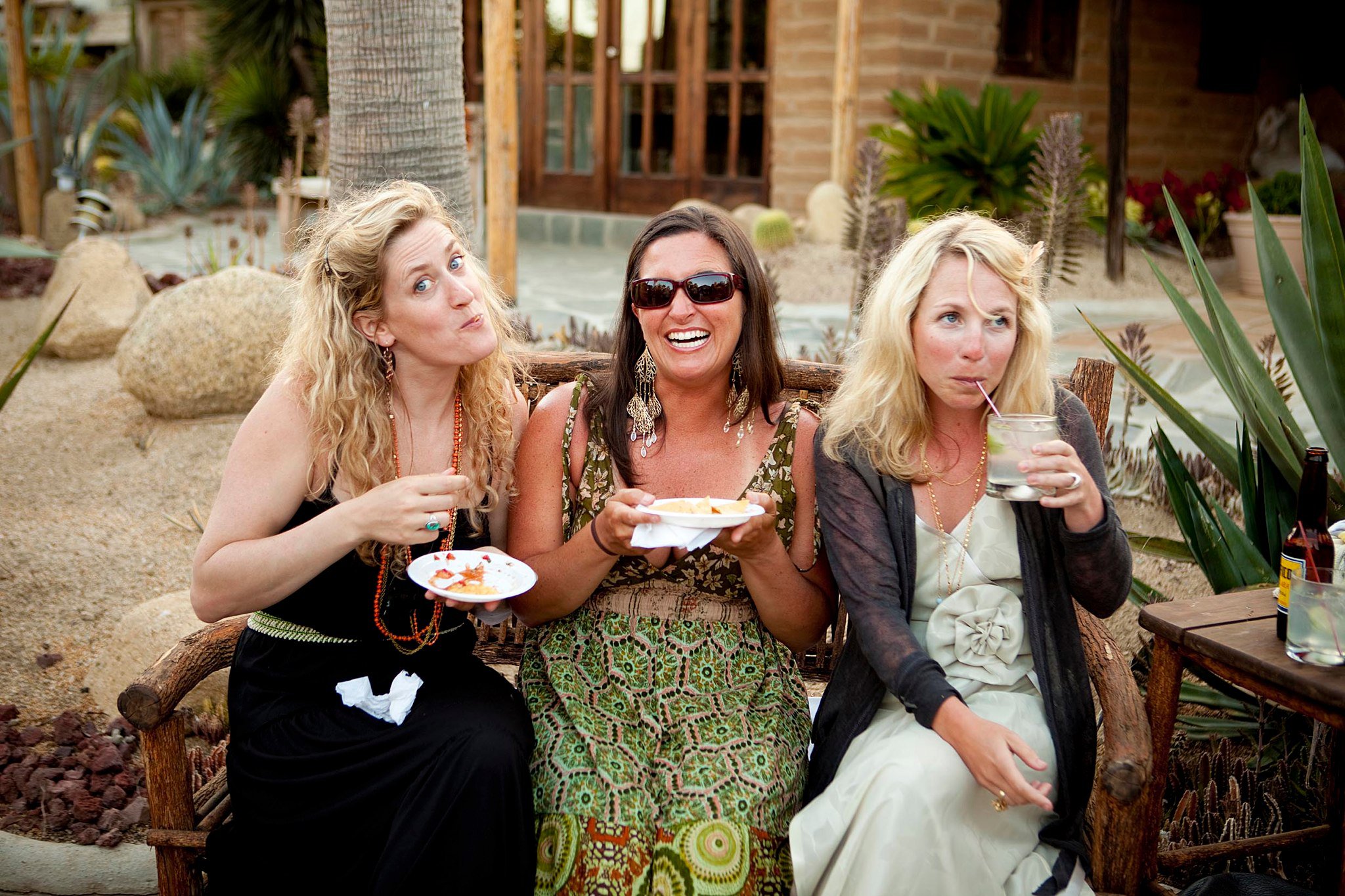
I brought a pair of earrings that I fell in love with at first sight and was lucky enough to score at a 50% off sale at Betty’s Divine. Here they are in Mexico….

They’re flashy. They dangle below the collarbone. They jingle. They weren’t exactly “me,” but we’d had some fun together. I hesitated—I love them!—but the truth is they’d been gathering dust at my house. I hadn’t even considered them in six months. I’d moved on, but was loitering in the past. They were not on my short list, and they deserved to go home with someone who might take them on a road trip or at least out to dinner.

At the party I spread them out on a side table with other jewelry. I hoped someone would see them and recognize their awesomeness. I’d like to say I watched the table anxiously to see who scooped them up, but I was too busy digging for new treasures to notice.

Then I spotted them on Melissa. They had met their match. I hurdled ladies and piles of clothes to say: “Girl. You are rocking those earrings.” I felt oddly compelled to tell her a couple of things about them, as if she was adopting a dog and needed to know that he drinks a lot of water, doesn’t like thunder, and will claim any couch as his own.

She’s a smart cookie who can handle her earrings just fine. She loves herself a wild accessory and I knew she’d incorporate them into her wardrobe without a hitch. I figured she might even take them on a trip knowing she’d get a lot of mileage out of one awesome accessory that can dress up a plain white tee.

I thought about telling her that they snag on scarves, can be hazardous when hugging, and have so many hinges and moveable parts that sometimes a piece (or two or three) drops off, but instead I told her about how that last detail turned into one of my favorite things about them. “I lost one of the crystals on the beach in Mexico, which was a bummer, but when I got home I replaced it with this little piece of bone….” She fingered the bone gently as she listened to then story, then said “I love it! That makes them even more fabulous! I love it!”

An hour later I was sitting across the room when someone complimented Melissa on the earrings. I saw her hands go up to the bone as I watched her tell my story, which was now part of hers. Maybe she’ll take them on a road trip. Maybe she’ll lose another crystal and will replace it with a bead or a shell, further layering the story.

Look around. I dare you to find something that doesn’t have a story. There’s your slice of the story, but there are also the elements of the story that began before you and the pieces that you may never know.

Live your stories, share your stories, love the stories within your stories.

Roots

I wrote my first blog post, Be Yourself; Everyone Else is Already Taken, on October 4 last year. I can’t believe it’s been close to a year, and today I want to get back to the roots of sorry I’M NOT WHO YOU THOUGHT I was and to the essence of that first post. I wrote, “We all make conscious and subconscious decisions about what we reveal to people and what we hide. Many of us are scared to be ourselves and rightfully so; we’re a judgmental lot.”

It’s been quite a year of hiding things, but it seems the tide is turning. We are fed up with lies and cover-ups, and what were previously tolerated as passable excuses are no longer acceptable.

In August it was confirmed that Lance Armstrong used performance-enhancing drugs during his cycling career, which included seven Tour de France wins that he’s now been stripped of. He fought the charges for years, saying there was no evidence, but finally gave up the fight and essentially confessed by quitting. One of Armstrong’s defenses was that by doping he was just leveling the playing field—every rider who finished second to Lance in the Tours has been connected to doping—yet he was (unfairly) given hero status for his supposedly “clean” performance, and their “lesser” performances were judged against his.

It’s unfortunate, but we judge ourselves by the people around us, using external factors for our benchmarks. The playing field is not level, nor will it ever be. Some are more athletically inclined and others possess musical aptitude. We have left brain people and right brain people. Some people are born rich, while others are born poor. The comparison and differentiations are endless and ongoing.

One of the biggest conceals of the year is still unfinished: Mitt Romney hiding his tax returns. Even Republicans have called Romney arrogant for not disclosing. Ron Paul, former Republican candidate, said, “Politically, I think it would help him…In the scheme of things, politically, you know, it looks like releasing tax returns is what people want.” People want truth. In general we are more forgiving of sins if we don’t feel we’re being lied to, and in many cases the lie, cheat or steal is worse than the actual offense.

Ana Navarro, former advisor to John McCain, said, “He should just release the stupid taxes and eliminate the Obama campaign tactic of insinuating he’s got something to hide.” I don’t want to speak for the Obama campaign, but insinuate seems like a light word for this. The question is no longer does Mitt Romney have something to hide, but what is Mitt Romney hiding. We already know he’s rich, but what the people want to know is what tactics he’s using to make himself richer.

It’s kind of like people saying their hair is “just lightened by the sun,” or claiming to have year-round golden tans when in reality they get their color through sprays and bulbs. The proof is in the pudding though, and the truth is eventually revealed. I often have massage clients who are there to receive their first massage. Some come right out with it, “I’m so excited! I’ve never had a professional massage!” while others seem embarrassed to confess. I always ask the usual questions—Any accidents or injuries you’d like to tell me about? Any areas you’d like to focus on? Anything you particularly like or dislike about massage?—and I usually get a lot of information to make the massage better for both of us. If I feel the client isn’t sure what to say or is looking for the “right” answer I ask another question, “How long has it been since your last massage?”

The answers are telling. Some say that it’s been a year or three months, and others are vague, telling me “it’s been awhile.” It’s amazing how difficult it can be for someone to say, “I’ve never had a massage.” It’s as if they’re embarrassed to admit that they’ve never had one, but if they told me that right away I’d have walked them through a typical session and told them that the time on the massage table should be controlled by them, not me, and that we can make modifications to make the session more comfortable and beneficial.

Sometimes people are so nervous and embarrassed by their not-so-big secret of never having a massage that they barely listen to my shtick, and are more focused on their lie than on what I’m saying. They panic when I leave the room and tell them to “Get undressed to your level of comfort and start face down in between the sheets.”

“I didn’t listen! Do I leave my underwear on? Take it off? Do I get under the blanket? The sheet?” I’ve returned a couple of minutes later to find people in their underpants on top of the sheets, people wrapped in the sheet like they’re in a doctor’s office and sometimes a fully dressed person standing in the room waiting for the next instruction. Then they say, “Um, I’ve actually never done this before….”

Why wait? Why go through the turmoil of not just telling the truth? Why are we so dang embarrassed to admit what we don’t know?

Mitt does not know how America will react to the information in his tax returns, but he’s finally realized that it’s imperative he release them. According to the The New York Times Mitt and Ann Romney filed their 2011 tax returns this morning, and this afternoon the return will be posted online. According to the Romney Campaign, “Also posted will be a notarized letter from the Romneys’ tax preparer, PricewaterhouseCoopers, LLP (PWC), giving a summary of tax rates from the Romneys’ tax returns for the 20-year period of 1990-2009.”

Does Mitt get a pat on the back for doing something he should have done months ago? Probably not. The findings are likely to create a larger gap between him and the average, middle-class Americans and further generate anger that he waited so long.

I don’t want this blog to become politically slanted one way or another—that is not the purpose. The purpose is to think about where we place ourselves in the world, and the decisions we make about how we present ourselves. It’s about what we choose to reveal, and what we choose to conceal. It’s about choice.

Undies on or undies off—it really just doesn’t matter. What matters is telling the truth, being forthright, and not having anything to hide.

A quote has been floating around the Internet lately that hasn’t been attributed to anyone (that I know of) but I think it makes good sense:

“Live in such a way that if someone spoke badly of you no one would believe it.”

Lesser of Two Evils: Mind vs Body

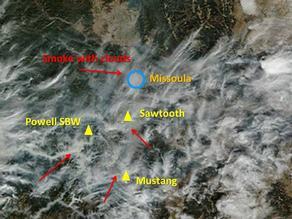
Over the past week the air quality in Missoula has ranged from “unhealthy” to “very unhealthy,” with conditions in the Bitterroot Valley, just south of Missoula, determined “hazardous.” At “unhealthy” you should limit prolonged exertion outdoors; at “very unhealthy” you should stay inside; hazardous air quality more or less speaks for itself.

Friday was bad. High school sporting competitions were first relocated to fields with cleaner air, but when the overall quality continued to worsen they were flat-out cancelled. The University of Montana Grizzlies played—only apocalypse could cancel that—to 24,000 fans.

One friend reported on Facebook that she was “Suffering FB induced air envy,” then she begged for rain. There was a lot of chatter about cabin fever and the general consensus is that it would be nice to get out of town “just to take a deep breath.” The problem is: where to go? There are fires all over, and even if you go to an area without fires there’s still the element of wind to blow smoky air into fire-free valleys. There’s also the chance that a new fire could sprout up anywhere, anytime.

The closest fire to Missoula is about fifty miles south in Hamilton where almost five thousand acres are burning and the blaze is 25% contained. We’re getting our share of that smoke, as well as smoke from all other directions. By far the most smoke is coming from Idaho, where the Mustang Complex fire is currently at 327,017 acres with 20% of it contained.

Image

It seems selfish; we worry about having cabin fever while our neighbors to the south worry if the cabin will make it. This is the warning down in Idaho: Residents returning to their homes are warned that hazards may exist such as weakened trees, rolling and burning debris, and thick smoke along roadways. Residents should be fully prepared to leave at a moment’s notice if there is a change in fire conditions.

So there’s a bit of smoke in the second largest city in Montana, but it’s not like we’re in Beijing, where their Air Quality Index (AQI) is regularly as bad as our worst. There’s a twitter site that regularly tweets the AQI in Beijing, and China has asked the American Embassy not to release its air data.

The research is clear: pollution causes oxidative stress to the body. Prolonged exposure increases the likelihood of cardiopulmonary diseases and inflammation, which takes its toll on all areas of the mind and body. With its increased respiration, exercise further increases risks. Outside Online published an article back in July about this, and cited Netherlands research that “estimated that the air-pollution effects of switching from a car to a bike for short daily trips in polluted cities would subtract between 0.8 and 40 days from the average life span—but the additional exercise would extend it by three to 14 months.”

I know this smoke is bad for me, but I also know what’s worse: staying still. My recent blog post talked about how statistics lie, and one reader said, “ I know when my gut tells me to go in a certain direction, I’m inclined to gather data that supports it.” It’s true, sometimes sadly so. More than one of my friends has suggested that I am capable of justifying anything, and—like most vices and virtues—the door swings both ways.

So.

I discovered a long time ago that physical exertion is crucial to my mental health. If walking and hiking are good, then running is better. I rarely run long distances, and with even less frequency run fast. It could be argued that I don’t run—but rather that I jog—but I don’t care what you call it— between touchdowns both feet are simultaneously suspended in the air. It both literally and figuratively moves me. I’ve been relying on running as a mental health counselor since before going for a drive was an option, and it’s the most dependable antidote to a bad mood that I’ve ever found. It is basically free—each run on a pair of one hundred dollars shoes costs just pennies—and you can do it anywhere. You can do it and actually go somewhere, or you can do it on a track, up and down bleachers and even on the stairs in your house if that’s all that is available. But however it’s done, it sure seems to work.

I play mind-over-matter with myself a lot. “If I think this doesn’t hurt, then it doesn’t,” or in the case of bad air quality, “I’m going to imagine that the sky is blue and the air is clear.”

I know we can’t all run. I dedicated a run last week to a runner friend who just had knee surgery and can’t right now. Last February I ran with thousands of others in honor of Sherry Arnold who was abducted and murdered while on a run. While on a run. That just isn’t fair, but so many things in life aren’t.

We get angry at forest fires for “ruining” some of our summers, and in this case our September, typically a glorious time in Montana. Some say the forests are angry with us for encroaching too deeply into wilderness areas, and that the fires are just doing what they do: staying healthy in their cycle of life and death. Fires help maintain soil health by converting ammonia into nitrogen, which is a crucial component to plant prosperity. Things like artificial fertilizer and chemical pesticides harm natural nitrogen cycles, so…in lieu of shoving an amateur science lesson down your throats: you do the math.

Destruction can be beautiful in a heartbreaking way, as can running in the midst of it. On my recent hikes and runs on Waterworks Hill I’ve often been alone. It’s creepy to pull up to a near empty trailhead, and when I’ve been alone I’ve thought 1) have I completely lost it to be up here right now? and/or 2) Oh Wow! I’m alone! I’m going to crank up my music and sing my little heart out!

But my stubbornness does not always serve me well. Friday was one of the worst smoke days we’ve had in Missoula—with an afternoon AQI to rival Beijing’s—but because my body begged to move and sweat, I headed up to the hill. I walked for thirty minutes, then said “What the hell?” and ran for another thirty. I went up there crabby, and came down decidedly less so. It worked. But did it? I worked all day Saturday and then was so headachy, fatigued, and downright irritable that I missed a good friend’s birthday party. I felt bad about it, so what did I need to do on Sunday?—you’re right, hit the hill again.

I walked with a friend, then the sky cleared enough to be noticeable and I decided to stay and run by myself for a while. I hadn’t needed motivational music since I went with a friend, and my ear buds weren’t in the car. I debated if I felt like running alone—and by alone I mean without the Rolling Stones, Wyclef, and Taylor Swift—and it turned out I did. It was, after the all, the way I’d started my twenty-plus year love affair with running: in silence.

But it’s not all that silent when you think about it, though it is without external distraction. I listened to my feet hit the ground and my breath and my heartbeat. I heard Lucky panting next to me, and I noticed him in ways I often fail to. There was no iphone app telling me how far or how fast. There was nothing to hold. It became a running mediation where I thought of nothing else but exactly what I was doing in each moment of feet lifting and feet landing, breathing in and breathing out.

Despite the lingering smoke, it was one of the best runs I’ve had in awhile.

Image

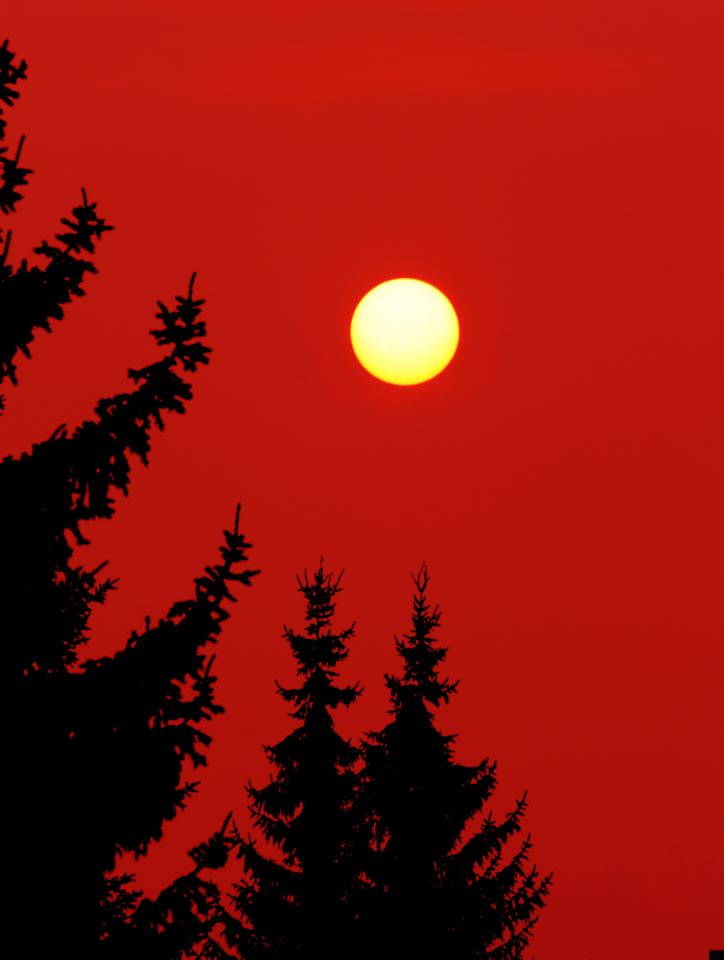
A picture of a smoky sunset from Hamilton, MT that I ripped off KPAX-TV’s Facebook page.

Mean Girls: All Grown Up

I’m not always up for a Naked Ladies party. Sometimes I think the dynamic of a group might be too intense, or I don’t have time to go through my closet, or I just don’t feel like subjecting myself—in bra and panties—to trying on what may or may not work in a roomful of other people. You kind of have to be in the mood for that last one.

I prefer going into any dressing room alone, though will occasionally share with a close friend, but only if no other option is available, and have never even liked getting dressed—from my own closet—in front of my boyfriends. I know many women who are not so shy; they’ll take an entire basket full of clothes into a dressing room and be perfectly comfortable with a friend sitting on the floor drinking an iced mocha and commentating on every hem, collar, and waistline. I am not one of those women.

Erma Bombeck was a slapstick columnist and best-selling author who made a career out of finding humor in the mundane. One of her titles speaks for itself All I Know About Animal Behavior I Learned in Loehmann’s Dressing Room. Loehmann’s dressing rooms are legendary in that they are long, open rooms with three-way mirrors lining the walls end to end. There’s nowhere to hide, nowhere to avert your eyes, nothing to do but hope the women around you don’t narrate your experience of trying to make an 80% off designer dress work for you, when you both know it won’t. Some things you need to figure out for yourself and some things are better left unsaid, but in Loehmann’s dressing room all bets are off. Women have even been known to put another woman down not because she looks bad in something, but because they want the item for themselves. It’s cruel. It’s mean. It’s sad. It’s typical.

Girls are inherently mean. In 2004 Mean Girls debuted as a number one hit movie based on the book Queen Bees and Wannabes by Rosalind Wiseman. Adults thought it was hilarious, but teenagers, screenwriter Tina Fey said, “…watch it like a reality show. It’s much too close to their real experiences so they are not exactly guffawing.”

When we are too close to a situation we might not be able to laugh, but from that uncomfortable place we are prime for retaliation. We only know how to be hard on other girls because we’re so hard on ourselves. Boys are mean too, but their aggression manifests on sports field as physical acts of violence, whereas girls are socially obnoxious and engage in bitchery that seems to know no bounds. The door tends to swing both ways, though, and a trendsetter one day might be eating her lunch in the bathroom the next. Self-doubt and insecurity are generally at the root of “mean girl” behavior, but that’s hard to remember when you’re on the receiving end. One woman had such a terrible experience as a sorority girl that, even twenty years later, she was wary of female friendships and avoided dealing with women, “particularly women in packs,” and wrote an article about it for the New York Times, which turned into a book called “The Twisted Sisterhood” that the Associated Press described as “an earnest look at how women might stop turning away from one another.”

It’s not always so bad, or at least it doesn’t have to be. Most of us grow up, and we have the option to natural select the mean girls out of our lives as we bury our own inner mean girls. We learn to be gentler and more forgiving of ourselves, and in turn we can offer the same to others. In the same way that meanness proliferates, so does generosity.

I had a hunch about last week’s party. I had a feeling it was going to be a good one. I knew a few good friends would be there but that the majority of the group would be acquaintances and a couple of people I’d never even seen before and that new friendships would be made because barriers are instantly bulldozed when you have to ask the woman next to you, “Um, I’m stuck; can you help me out of this?”

I wanted to get rid of stuff and didn’t even care if I brought anything home, while other women went with the intention of taking home a mother lode; that’s what makes these events so great. But is that it? Is it just about cleaning out your closet and/or scoring a new, free wardrobe? Nope, not at all.

There were thirty or so women at the party ranging from early twenties to later forties. Some with kids, some practically kids themselves; some with bigger incomes, some with EBT cards in their pocketbooks; some who always buy new things, some who’ve stuck with the same styles for years. The women in this group were polite, thoughtful, and humane, but I didn’t know that yet. I’d heard horror stories of women being aggressive, hoarding treasures, acting like little girls.

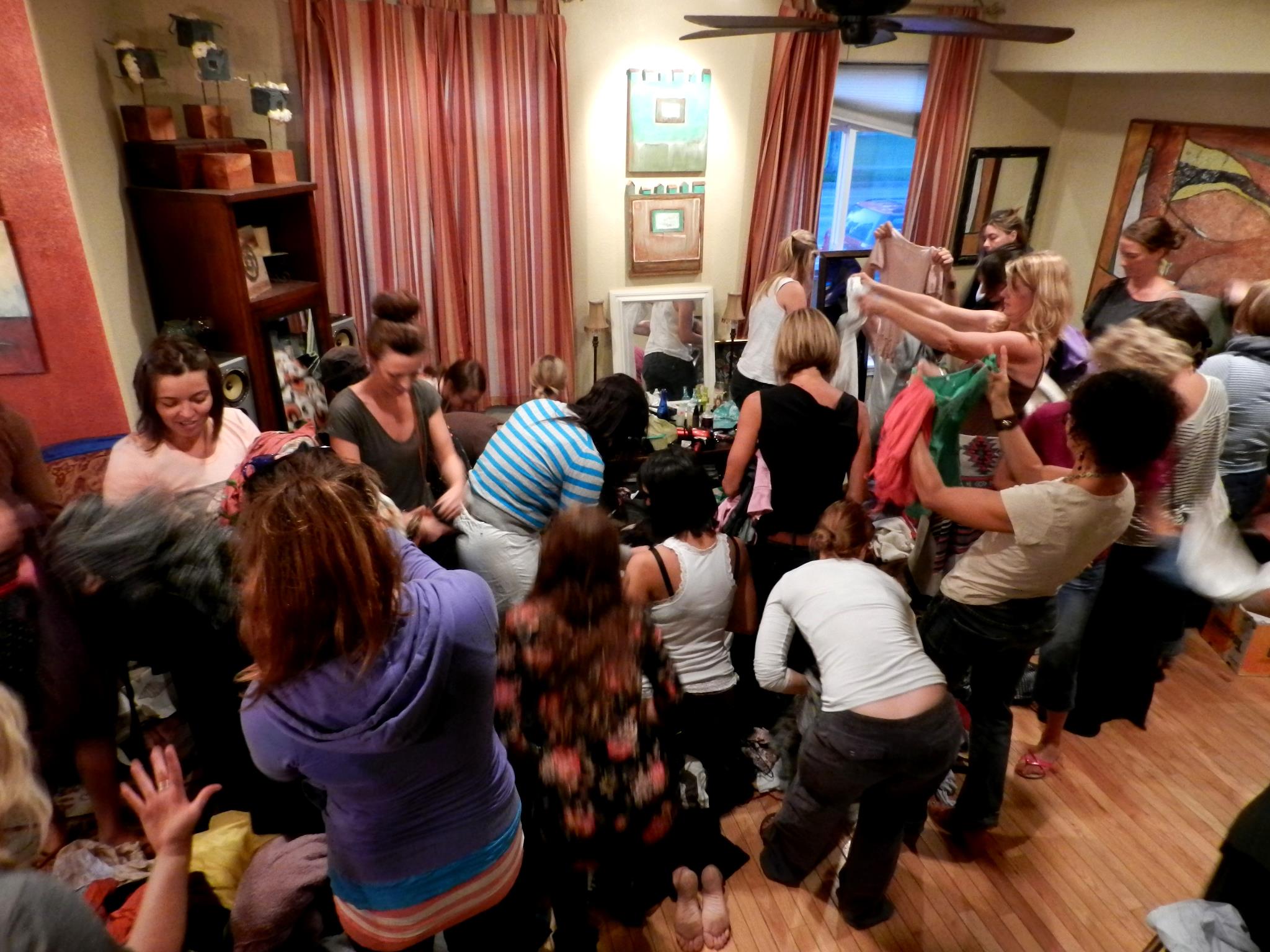
We drank wine and snacked on appetizers before the main event. We introduced each other to our friends, and re-introduced ourselves to each other. With so many women there the pile was epic in proportion, and though we were all excited to dig for treasures, we had so much fun connecting on a human level that we almost forgot about why we were there. One friend called another right before the digging commenced and said, “I think you need to get over here…”

Image

My friend Charlotte and I had our eyes on the same pair of barely worn, apricot-colored, basket weave Seychelles, and we almost bonked heads reaching for them when our hostess told us to “Go!” but came up laughing and each holding a shoe. They were on the smaller end of my range and the larger end of hers. She tried them first, “They’re too big; you should have them.” I tried them on and they were a little tight. I considered trying to stretch them out, but have been down that road before. Bursitis? Tendinitis? I did that in high school when I desperately wanted a pair of loafers from Barney’s (not my size but they were on sale…..), and god help me if I haven’t grow out of certain adolescent behaviors, not the least of which is trying to force square pegs into round holes. We both loved the shoes, and it was almost absurd how we wanted the other to have them. We finally agreed that she could add an insole so should take them, and then we were off and digging through the pile with the rest of the ladies.

Clothes flew across the room as we found things we thought would be great on our friends. It didn’t stop at the friends we came with, and we sized up our neighbors, though not in the bad way. The flatter-chested traded with the bigger-boobed. The taller gals passed the shorter pants and skirts to the more petite. The first round of try-ons went back into the pile, which at times seemed bottomless. Every once in a while we turned the thing like a giant compost pile, and eventually the pile evolved into more of a slug shape so more women could have access to it. We were cooperative and conscientious.

A stranger turned to me in a sweatshirt, “What do you think?” “It’s too big,” I said a little tentatively, “And I don’t think it’s your color. Try this one.” She loved it, thanked me, and then we exchanged names. I downright cheered when a woman found a hot dress and a pair of booties that matched perfectly. My excitement overwhelmed her at first, but other people joined in and the next thing you know she was vogue-ing for us all.

We also told each other, “Sorry, but I don’t think I can get this zipper all the way up,” “That jacket doesn’t do you any favors,” and, sometimes just straight up “No.” It’s amazing what you can say if there’s a genuine smile behind it and a complete absence of malice.

The take-home: you can be honest and still be kind. You can share and expect nothing in return, you can understand that giving and receiving are the same, you can love yourself and others. Can this evolved behavior extend beyond naked ladies parties? It sure can. Ladies: let’s do this.

Statistics and Naked Ladies

Now that readers of this blog come from sources other than my Facebook friends and the original “followers” (thank you, friends and family….), I’m more curious about the stats page than I used to be. I used to only look at the number of people clicking to read the blog, but little else as there was little to see. Most of my readers came from the United States with an occasional click from Canada or Kenya, and I knew who those people were, and most of my referrers were Facebook or Yahoo. Now I have readers from over eighty different places. I’d say countries, but some of the places listed are territories, republics or insular areas and not separate countries, and I have search engine referrals, which I never had before. But here’s the thing: statistics are tricky.

I remember fall of my sophomore year of college like it was yesterday. I’d started college as a Psychology major, but after a challenging summer internship where I worked with exasperated adults and teenagers who needed to be chased across the facility’s expansive lawns I decided that maybe that path wasn’t for me.

I was already enrolled in the psychology department’s Statistics and Research Methods class and stayed registered to fulfill my liberal arts college’s math requirement. This class did terrible things to my GPA, and along with that uphill battle I’ll never forget the professor’s opening remarks: Welcome to Statistics and Research Methods. Before we go any further I need to tell you one thing that you need to remember regardless of what you learn this semester—statistics lie.

As puzzling as it was, I liked the professor’s humorous, honest spin on what is, for most, a dreaded class. This theory originated with Thomas Carlyle, the Scottish writer and philosopher in the first half of the 19th century, but held as much water in my 1993 class as it does today.

We’re currently inundated with statistics as politicians barrel toward November’s election. We have facts and forecasting. We have number of jobs created versus unemployment rates. We have numbers of Americans without healthcare and numbers of Americans foreclosing. We have approval ratings, and, of course, the opposite.

Statistics are often misused resulting in falsehoods that can be not only misleading, but also dangerous. For truth seekers it can be frustrating and mind spinning. Misuse of statistics occurs when unfavorable data is discarded, when questions are loaded or overgeneralized, when samples are biased and not random, and when data is dredged and/or manipulated. Tables of data are the most precise way of presenting information, but if statistics misuse still doesn’t produce the “right” data then…what to do?

People are naturally inclined to trust numbers over words, and we also want information in the most expeditious and attractive way possible. Besides, we like pictures and things that are pretty. People are so accustomed to graphs that they often don’t look closely and accept the information without suspicion. Truncated bar graphs, lack of scale and a y-axis that doesn’t start at zero are all some of the ways that statistics lie visually. Information can be missing, figures can be incomplete, and captions can be vague, but we fall for statistics, and we fall hard.

In school we learn that correlation does not imply causation. We learn about deductive reasoning, circular arguments, and how to discern fiction from fact. We learn that there is a multitude of ways to approach problems and solutions, and that the conversations that occurred around our family dining tables were not necessarily fact and represented only one version of a multi-faceted, multinational story.

Most of my readers come from the US, followed by Canada, the United Kingdom and Australia. WordPress tells me that people in India, the Philippines, and Italy are pretty interested in what I have to say, but that was not nearly as fascinating as finding out that I also have a significant number of readers from Pakistan, Malaysia, and United Arab Emirates.

Truth be told, there were two things that boosted my readership to new proportions that extended outside of my friend and family zone. The first was my post about Joseph Bakken, the kid who cried fake gay bashing, and the second was my post about live storytelling that WordPress picked to feature as “freshly pressed” on its homepage. Then there’s now; more than half of the clicks from the past two days came from search engines.

By far the most searched term was “Joseph Bakken,” but my name and “running a half marathon without training” were also searched multiple times. It’s amazing how these interwebs work. People searched “I’m sorry,” “just pretend it’s all okay,” “fear can’t hurt you any more than a dream tattoo,” and “women wearing ponytail holders on their wrists” and were led to my blog. Bizarre. Fascinating. Cool.

One search from the past week really caught my attention though, and I can’t imagine who or why or how. Someone searched: “Missoula People trust Too Much.” Really? I wonder how many hits I’ll get from people searching “naked ladies.” Surprise!

Lots of things lie, including the title of this blog post. I did not talk about the Naked Ladies party, but trust me, there’s a lot to say. But statistics tell me that people have short attention spans and this post is already well beyond the quota for web content, so if you’ve gotten this far pat yourself on the back for not being….just a number….

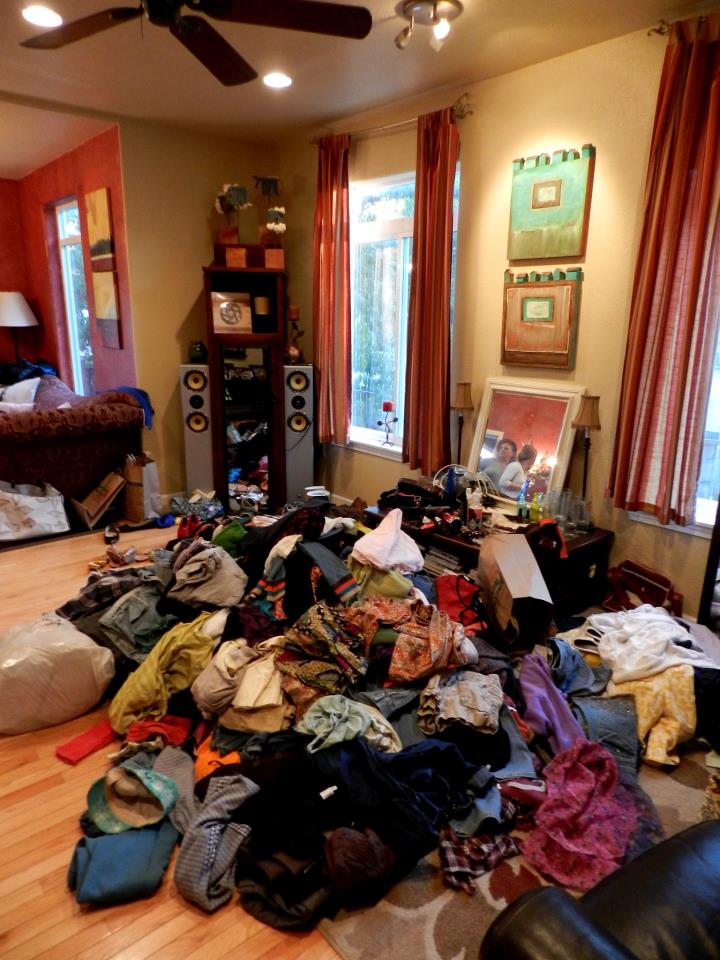
Here’s a sneak preview of my next blog post which will be about the clothing swap party. Take a look at this picture, and imagine what happened when our leader said “Go!”

Image

Second-Guessing

 To thine own self be true. –William Shakespeare

In less than a month I’ll have lived in my house for two years, which is the longest I’ve lived in any one place since I was sixteen. Some quick math tells me it’s about a 60/40 split in favor of twenty-two years of meandering.

It’s strange, though, because I value home. When I move into a space I’m quick to set up shop, flatten and recycle boxes, and act as though I’ve lived in the place forever.

I arrange lamps for optimum ambient light. I make my bed, put my books away, hang pictures, and situate the kitchen and bathroom. I buy some flowers, light a candle: I’m home.

I’ve loved every place I’ve lived in. I even loved the one that took two days of scrubbing to rid the kitchen cabinets of (what seemed like) decades of grease. I loved the ones that seemed too sterile, too noisy, too smelly from whatever was cooking downstairs.

I’ll stay up all night to scrub a stranger’s filth with steel wool and make sure all my shirts and hangers are going in the same direction, but as much love as I feel for my new (obviously semi-temporary) homes I quickly fall into my old patterns. Before I’ve sent my second rent check I’ve already started to wreck the place. I don’t mean wreck-wreck, I just mean making it more “homey.”

Piles build. Doors become overwhelmed with bags and coats. My toothbrush has to fight for space near the sink. Ponytail holders and bracelets cling to every doorknob. Junk mail discovers my new house then lands prime real estate next to the recycling bins, which don’t take themselves to the sorting center. The kitchen counters have teas in various stages of brewing and miscellaneous bowls of half-finished this-or-that and it often looks like someone got called out on an emergency in the midst of making dinner.

My nightstand book pile grows taller every day. My clean-enough-to-wear-again clothes piles exponentially increase. And then there’s the clean laundry in the hamper, the poor things in a perpetual purgatory of “go back in the dryer to de-wrinkle or just hang up?” And as with every unanswerable, million-dollar question: not a lot happens in limbo.

Six years ago I was getting ready to leave for Honduras, and a couple of friends came over to help me sort through the stacks of clothes all over my bed. I was as attached then as I am now to my Missoula uniform—yoga pants and capilene zipneck tops—and I had more than a few stacks of the components ready to go to the Caribbean. Another stack contained more than a dozen assorted swimsuit pieces, and as my friend eyed the two piles she says, “You can’t take it all. You’re going to have to trade the Patagonia tops for the string bikinis.”

She said I could bring one “favorite outfit” and the rest had to stay. I pouted, but she was right. The bikini pile went into the suitcase, and the other pile into a Rubbermaid bin that I marked in Sharpie: “Stays in Missoula.” With that indelible pen I scratched out passé labels from other stages of life. A label from a cross-country move said “Children’s Books,” one from an across town move said “Kitchen Stuff,” and from a time when we were staying put for a minute, “Lucky’s food.”

Six years later I’m not going anywhere (just yet, but never say never), but feel a similar urge to purge, clean, and sort. Because we’re hovering on the edge of fall in Northwestern Montana it is time to put most of the summer stuff away, but in the transition it’s a good time to figure out what works and what doesn’t.

Even—and maybe because of—our short summer here, an array of bathing suit pieces drape and droop over door knobs, towel racks, and backs of chairs. Those have to go into storage, with one or two suits left out for hotspring-ing. It’s sweatshirt season now, and another few eye blinks and we’ll be into down jacket season. Transitioning between seasons is the easy part; it’s actually getting rid of stuff that can be problematic.

There’s a lot of attachment in things, and it can be hard to let some things go. There’s the “I paid too much for these shoes” that aren’t comfortable and “These earrings were a gift and is it rude to get rid of them?” Then there’s “I just don’t feel good in this,” and “This may have been who I was, but is it who I am now?” They are small questions imbedded in bigger dilemmas.

I’m a strike while the iron is hot kind of girl, so yesterday when I was invited to a naked ladies party I pulled out a couple of tote bags and filled them with everything I WOULDN’T bring on a road trip/adventure. (There’s a link in “naked ladies” to get you to my friend Melissa’s blog post about these parties in case you don’t know about them. It’s not what you think; it’s better!)

I made a rule while I was doing this: no second-guessing. I suppose second guessing can be useful, but I find it to be stress and anxiety inducing. There’s a pragmatic place for second guessing. If you’re trying to decide to buy a car, house or vacation you can’t really afford; if you’re on the verge of kissing someone who isn’t your spouse; if you are not in tune with listening to your gut.

Sorting through clothes and accessories is not a big life decision; there’s just not a lot at stake when you’re getting rid of a shirt that doesn’t flatter. I decided to move to an island thirty miles off the coast of Honduras with more spontaneity than what I’ve used in my decision making over getting rid of a $200 pair of shoes that 1) are old, and 2) hurt after more than four hours. (Note: They’re just like this except in black, if you care.)

The regular questions rush in: But they’re classic! They’re great for weddings! You love dancing in them! All of these things are true, but they have not made as appearance at the last batch of weddings I’ve gone to in Montana where cowboy boots and (gasp!) clogs are fine for a wedding where the terrain is not likely to be level. In fact, I don’t think the soles of those shoes have ever hit Montana soil, though they have made a couple of trips to Vegas. The question: exactly how prepared do we need to be for what may or may not ever happen?

Research has been done that suggests second-guessing leads to unhappiness, obsession, and self-judgment. Second-guessing is so interesting in that it is dual-faceted; we can do it with anticipation or with hindsight. We can basically do it all the time if we choose to, but why would we choose grief?

Anything that doesn’t fit right went into the bag. Getting rid of the t-shirt that is too close to my skin color was easy. The blouse that makes me feel like I’m in someone else’s costume: also easy. The earrings from an ex-boyfriend: a snap.

I do not need to jeopardize my mental health with miniature decisions that, over time, degrade the ability to make bigger decisions and feel confident with the outcome whatever it may be.

Should I stay or should I go? Well that’s still up for grabs, but for now I’m keeping the shoes, not out of choice, really, but because I can only find one. I live in a small house with only one closet, which means I should be even more selective about what I keep, but it unfortunately means I stuff things into recesses and corners where they’re difficult to discover. We do this with our thoughts and feelings too, but that’s a different blog post.

While waiting for the stars to align in one direction or another I’ll focus on what I can control, which is my clutter, my intentions, and at the end of the day: myself.

Song and Dance

I’m pondering the end of summer. It’s a transition that can be hard on many of us, and I’ll write more about it in the next day or two, but in the meantime I wanted to post a few family pictures from summers in the 1930’s and 1940’s.

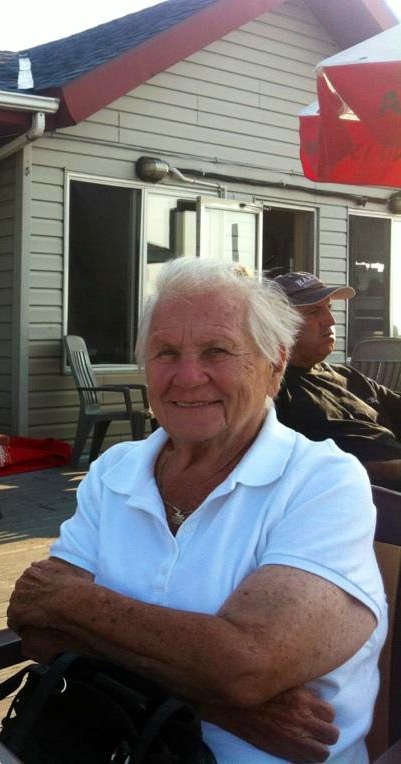
My grandmother is eighty-eight, and if you ask her she’ll tell you she’s doing great. She might even give a shimmy and a shake and ask if you think she’s still sexy though the question is rhetorical and there’s only one right answer. At eighty-eight you’re never what you used to be—not of body, mind, or spirit—but she still has a special sparkle, which I attribute to her stellar attitude. She’s always told me to “be my own boss” and “don’t let other people’s troubles get you down.” Her health advice is to eat a full size Hershey bar as often as possible (daily, for best results), get a good night sleep, and don’t worry too much. “Let that stuff roll right off your back,” she’s always said to me.

Maybe she has such a positive perspective on life not because her life has always been easy, but rather because it hasn’t. She dropped out of school in the eighth grade so she could look after her younger siblings while her mother went to work. Her father regularly disappeared on drinking and gambling binges and it wasn’t unusual for him to leave his family of six with no food or money. In more recent years she lost her three sisters and her husband in a four year span, and it would be unfair and untrue to say that the cumulative loss didn’t take a toll on her. These are not extraordinarily troubles or losses; they’re a part of life. And she knows that.

When I think of my Mimi I think of her singing, and I think of two songs in particular. The first one is, I think, her own creation. It has a lively tune and a coordinating dance and goes, “We’re gonna have a good time, we’re gonna celebrate!” (I think this song originates with my grandmother—perhaps at one point it started as a mantra—so if I’m wrong and you know the origin please let me know.) The other song is more melancholy, but the message is sweet. It’s a Nat King Cole song that starts out, “Smile though your heart is aching. Smile even though it’s breaking.” When she sings that song she likes to dance, and she’ll grab me and we’ll faux-waltz around the room; neither of us lead, we just look into each other’s eyes adoringly.

Sometimes life is a song and dance that comes naturally, and sometimes it takes more thought, effort, and coordination. Sometimes more than we have. But now onto the photos that remind me that even in hard times there are always some good times.

Image

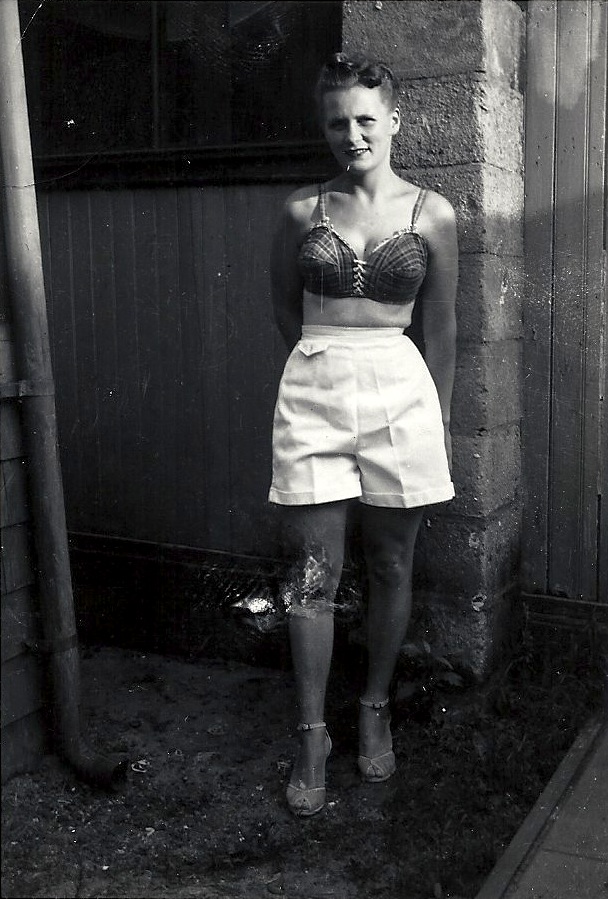
I love everything about this. The light. Her pose. The outfit!

Image

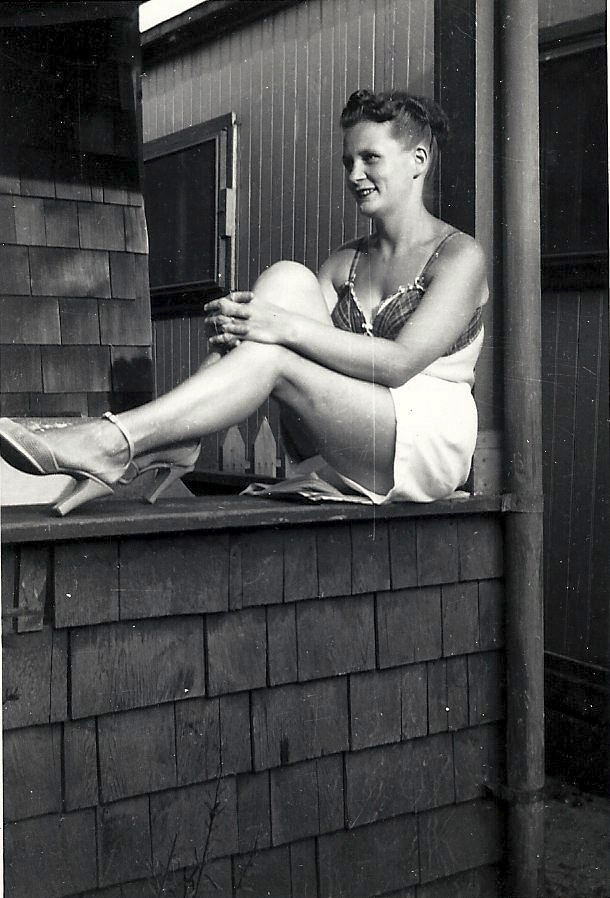
Same outfit, different pose. Mimi on the porch of her mother’s bungalow in Rockaway, Queens.

Image

My mother mimicking her mother’s pose.

Image

My mother on her grandmother’s shoulders in Rockaway. Nanny was a tough bird and a true gem of a woman.

Image

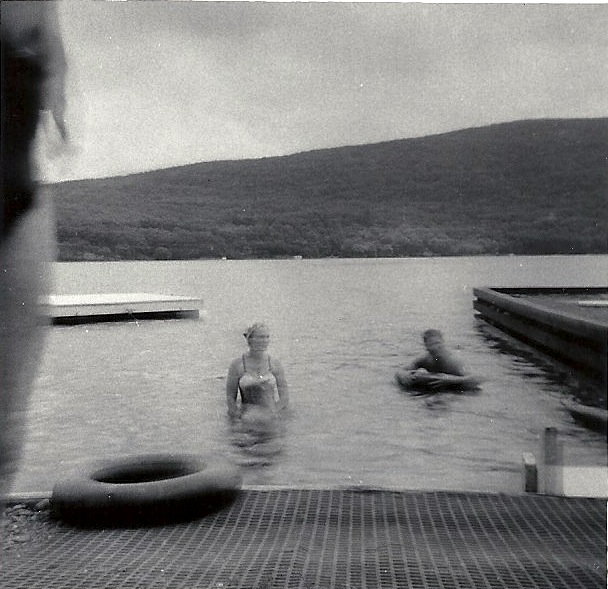
My grandparents at a lake. There’s something about the blur that I love.

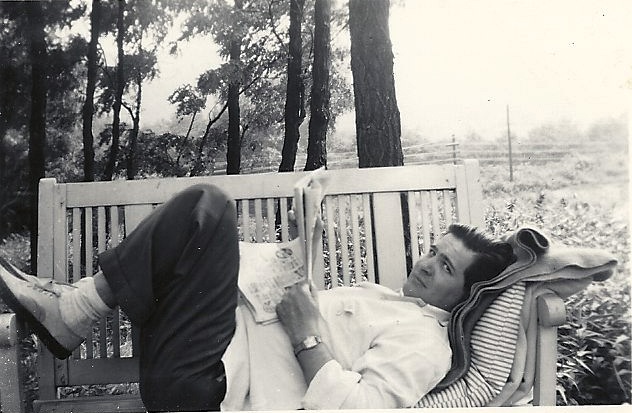
ImageImage

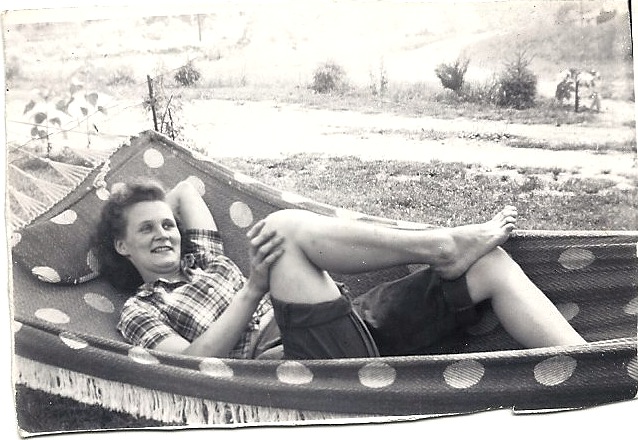
Lounging in a Hammock and reading the newspaper on a bench. There’s nothing about these pictures that isn’t pure bliss. I love that contented smile on her, that “I’m reading” look on him.

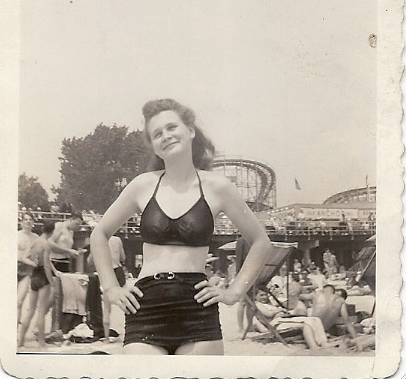
Image

Rockaway was their beach, and I love this sassy pose.

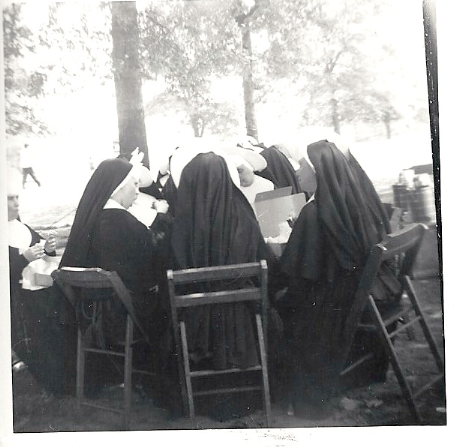
Image

They didn’t always go to the beach, and sometimes stayed in the city. I found this picture in June when I was visiting and I asked my grandmother about it. “It’s Central Park,” she said, and when I asked for more detail she looked at it for awhile then said, “It’s nuns in the park.” I did not need to press her for more information; her memory is fuzzy on some of the past these days and as much as I wanted to know more I settled for “Nuns in the park.” What else is there to know, really? They were having a good time, they were celebrating.

Last Sunday my mother and her cousin took Mimi out to Rockaway for the afternoon. Here she is on the boardwalk:

Image

I think she’s still pretty damn cute.

We Tell Ourselves Stories

“We tell ourselves stories in order to live.” It’s a great line, and the first line of the first essay in Joan Didion’s THE WHITE ALBUM, published in 1979. In 2006 she used that brilliant line as the title of another book of essays, which is a collection gleaned from her first seven nonfiction books.

No topic is off limits for Didion. She writes about politics and gangs, the Hoover Dam and Georgia O’Keefe, counterculture and permaculture. She wrote bravely about the death of her husband, which was followed by the death of her daughter. She wrote about that too. Didion confronts dichotomy and contradiction head on, and creates heartbreaking portraits of both people and place.

She’s unapologetic and unsentimental. Her observations are astute, her prose is spare, and she untangles life in a way that makes the reader feel she’s looking her in the eye, saying, “I get it.”

There’s this theory in storytelling that the more intimate and personal the detail, the more universal the story becomes. It’s curious, really, and it seems the opposite would be true, but when a storyteller trusts the reader, the reader trusts herself.

I like to craft stories on paper. I’ve been writing a lot this summer, and I love the process of telling a story then cutting it up. I love choosing what to reveal and what to keep hidden, where to be overt and where to be a little bit coy. The end becomes the beginning, there’s a narrative thread for the reader to hang on to, and there are a few twists and turns in the middle. It’s on paper, a permanent record of sorts.

Back in May I did something different. I got up on a stage in front of a few friends and a lot of strangers and I told a story. No notes, not even an index card. I thought about writing on my hand or arm, but figured that would be weird. I practiced a little beforehand, but every time I did I blew it. I went over the allotted ten minutes, I forgot a detail, I told too many details.

When the time came to tell the story I thought about blowing it off, faking sick, or just saying, “I can’t.” I took ballet and tap dance lessons as a kid, and all year I’d practice for the recital and order the costume then I’d back out in the final hour. I’d tell my mother, “I can’t get on that stage,” and she’d say, “You don’t have to.”

At thirty-eight years old it was time to stop making excuses. You might be thinking, “What’s the big deal?” Ten minutes on a stage isn’t a lot. Telling a story about how I met my dog is easy; it’s a story I’ve told many times. But fear is a power deterrent. I started my “story” by talking about how what we’re most afraid of is rejection. I needed to hear my voice tell someone else’s story before I could tell my own. Wrap your head around that one. {My friend Heather wrote a great blog post on fear yesterday. It’s good stuff. Check it out here.}

For some public speaking is no big deal, but we all have our things. I know people who dig in their heels like a dog headed to the bathtub if they’re pulled onto a dance floor. I know people who are afraid of success, intimacy, and abandonment. You know them too. I know people who are afraid to do things with their bodies while others are afraid of doing things with their minds. Some are afraid of both, rendering themselves paralyzed. People are afraid to speak up, stand out, fall apart.

And then once in a while you have to say, “What’s the worst that could happen?” and you just go for it. I washed and brushed my hair. I had a cocktail and ate a banana. I sat with my friends. I listened to others tell stories and I didn’t run out the back door. Then I got on the stage, said a few things I didn’t mean to and forgot a few things I meant to. And I survived. People laughed, but not at me.

Winston Churchill said, “If you’re going through hell, keep going.” I’m okay with two steps forward one step back, but no steps forward? I’m all full up on that.

I was nervous about what I’d do with my hands while I told a story/freaked out on stage, and I had a dog biscuit in my pocket from Bernice’s bakery which I fingered like a worry stone while I spoke.

When I was done one of my friends let Lucky off his leash (we’d smuggled him in after intermission) and he found his way to the stage, but was terrified to go up the steps. Marc Moss, the mastermind behind the event (TELL US SOMETHING)  encouraged Luck up the steps, but it turns out the stage fright apple didn’t fall far from the tree. We can both ham it up just fine among friends, but on a stage…hell no!

Then I remembered the treat. I pulled it out of my pocket and Luck found the courage to make his stage debut. Here we are. When I first saw this picture I wondered what I was doing with my arm, then I saw my sweet boy reaching up for his prize.

Image

And finally, last but not least, here’s a link to the podcast for my story called “Picked By Luck.” 

You can explore several dozen Tell Us Something podcasts HERE and you can support future storytellers by showing up at the Top Hat on October 9th. The topic is “Forgiveness.” Um, what’s not to like? Ok then, see you there.

“Expose yourself to your deepest fear; after that, fear has no power, and the fear of freedom shrinks and vanishes. You are free.” Jim Morrison 

A letter to Joe: With sincere sympathy and complete contempt

Dear Joe,

Shame on you. When I first heard the breaking news about you being beat up I felt so many things. I felt sad for you and for the community of Missoula, and I felt anger at the guys (not men) who’d attacked you. I thought about writing you a letter offering to take you out for a belated birthday burger and beer at the Mo Club. I’m not gay, but I’d show you around the best I could. I thought about letting you know that Missoula doesn’t have a thriving gay and lesbian scene, but we do have some fine people. I told my friends how sad I was about what had happened to you, and we talked about the fact that Missoula doesn’t need another scar on its record.

Missoula is lovely and idyllic, but far from perfect. We act like a town, and forget we’re a city. This year we were nicknamed “rape capital” and had a federal investigation into how our community handles reported rapes. (Our mayor handled it like a champ.) We have a mess to clean up already, Joe; we certainly didn’t need you and your fake-gay-bashing-fiasco.

You weren’t the first guy to report a gay bashing violent attack in this city, but to the best of my knowledge you were the first to report a fake gay bashing. I have to ask: what the hell were you thinking?

When I was your age I did a lot of things without thinking, but my immature antics were more along the lines of your backflip gone awry. I’m no angel, but it never would have occurred to me to tell a lie of your magnitude then allow it to perpetuate. Did you know that people shared your story all over Facebook and that your story got tens of thousands of shares and comments? Did you read them and laugh? Your lie was so egregious that your story spread like wildfire. You crafted yourself as a victim, and Missoula was made to look like a jerk with egg on her face. But now, Joe, you’re the one needing a napkin. Check the mirror, kid, and go practice your flips in a swimming pool.

Are you even gay? Was your lie to paint Missoula as anti-gay because you are too? Why, Joe? Why did you do it? What in the world was your point?

When I heard that you’d waited three hours to report the assault I imagined how harrowing those hours must have been for you. It crossed my mind that you should have reported it immediately, but then I thought about you debating whether it would be safer for you to just keep the secret. Perhaps you were afraid that telling the truth would lead to further assaults from homophobic heathens. I thought about you sick to your stomach over what to do, though it turns out the only thing sick was your head.

I was on your side; a lot of us were. But no more. You’re just an attention-seeking jerk. On behalf of everyone who has ever had a secret but been afraid to tell the truth as well as those brave enough to speak up and demand justice: Ef you, Joe. Do you know about Savannah D.? That girl is brave; you are a coward.

I’m disappointed in your mild sentence as well as the fact that your jail time is deferred. That you only have to pay a $300 fine is ludicrous, but we are in a state where people are “allowed” to get seven DUIs. Oh, Montana, you’re lovely, but get with the program.

In reality, Joe, you were just a douchebag who slapped it hard on a backflip. On a busy downtown street. And on camera. The video is pretty hilarious, and all of us who felt sorry for you are now getting a good laugh on your behalf. So thanks for that, though it wasn’t worth it. Did you think you’d become infamous and get people to pay attention to you? Did you think your backflip video would become a youtube sensation and that something good would come of this? No, you’re just the guy who cried fake-gay-bashing-assault and smashed in his own face attempting a trick (or two) he couldn’t pull off. That’s the guy you want to be?

Nothing good will come of this Joe, except that now there will be more doubters of the people who actually have been assaulted. If that was your intention, you win.

And so now I’ll come to the apology part of this letter. I’m sorry I’ve been so hard on you. You are obviously hurting in some very deep place that is quite possibly inaccessible to you right now; maybe you don’t even know what you’re hurting from and are just acting out like a child. I pity you, Joe. I hope you get some help and you aren’t starting a long life of run-ins with the law. If you violate your probation your sentence will no longer be deferred and you’ll get a six month running start on the rest of your life. The prison system won’t help you, so go get some help for yourself now.

I hope you feel some remorse. I’d like to see you write an apology letter to all of the people who empathized with your pain and who supported you, and I’d like you to apologize to the city of Missoula. You probably have no idea how long ranging the effects of your actions will be on this community, but news flash: you are not an island.

Maybe I’m being a bit dramatic, but I’m pissed. I’m angry that selfish people like you pull stunts like this without thinking. So here’s the best that I can hope for: I hope that the scabs on your face last long enough for you to have some repentance for what you’ve done. I hope you feel ashamed when you look in the mirror and see those scabs, and I hope you spend some time in the sun and neglect to use sunscreen and that you have scars that last longer than the scabs themselves. I hope you learn soon, if you haven’t already, that karma is a bitch. Trust me on this one.

But I’m getting all mean again when I was supposed to be apologizing, and I don’t want to spend any more of my time writing a letter to a degenerate who probably won’t even take the time to read it.

Really, Joe, I just hope you’re sorry.

With sincere sympathy and complete contempt,

Jaime Alexis Stathis

Missoula, Montana

Image

Eventually All Things Merge Into One

This year marks the 20th anniversary of the movie A River Run Through It. The novella was published fourteen years earlier, and the story had that long to resound in our minds before the images and words came alive on the screen. And come alive they do; even the hardest hearts can’t help but get weepy. But there was more good done besides the softening of hearts, besides making people see themselves and their families differently.

According to the Missoulian, the fly-fishing industry saw 60% increases in business in 1992 and 1993. This was good news for guides, realtors, and the entire community of Missoula, where the story was hatched. It was also good for the Blackfoot River without which this story would not have existed.

The film was shot on other rivers in Montana—the Yellowstone, Gallatin, and Boulder—because the historic Blackfoot River was not what it had been after decimating from logging, mining, and agriculture. Because of the movie, millions of dollars have going to restoring and protecting the Blackfoot.

“Eventually, all things merge into one, and a river runs through it. The river was cut by the world’s great flood and runs over rocks from the basement of time. On some of the rocks are timeless raindrops. Under the rocks are the words, and some of the words are theirs.”

The Little Blackfoot drains into the Clark Fork near Deer Lodge, and five miles east of Missoula the same river receives the Blackfoot. There are lots of ways to help.

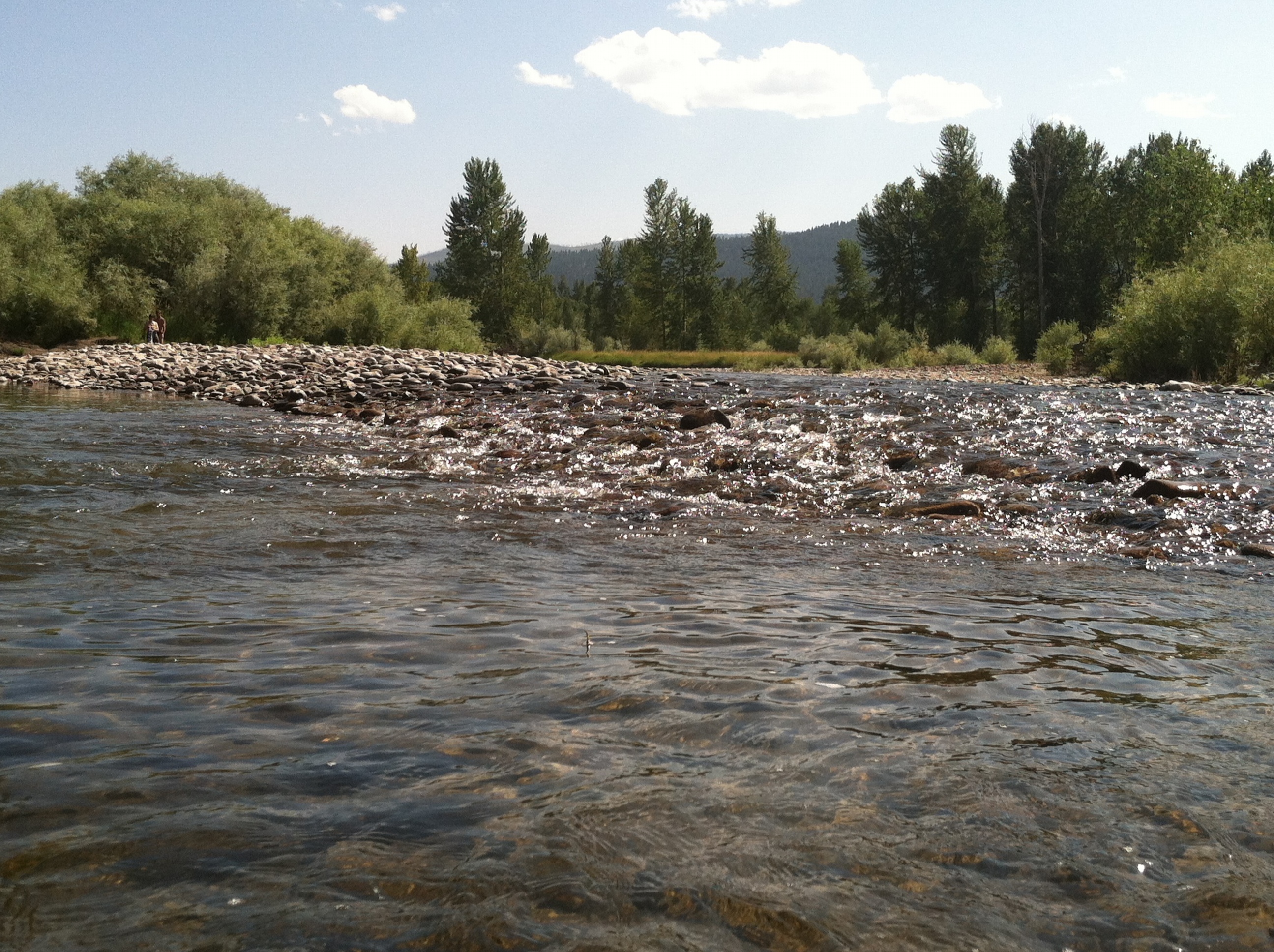
I’ve been enjoying this summer swimming, on average, five out of seven days. Sometimes it’s a quick dip and sometimes a longer soak. Sometimes I just sit alone or with a friend and listen to the water move rocks underwater. Wonderful swimming spots on the Blackfoot, Clark Fork, and Bitterroot Rivers (as well as the chilly but lovely Rattlesnake Creek) are all within minutes of downtown Missoula. We’re damn lucky.

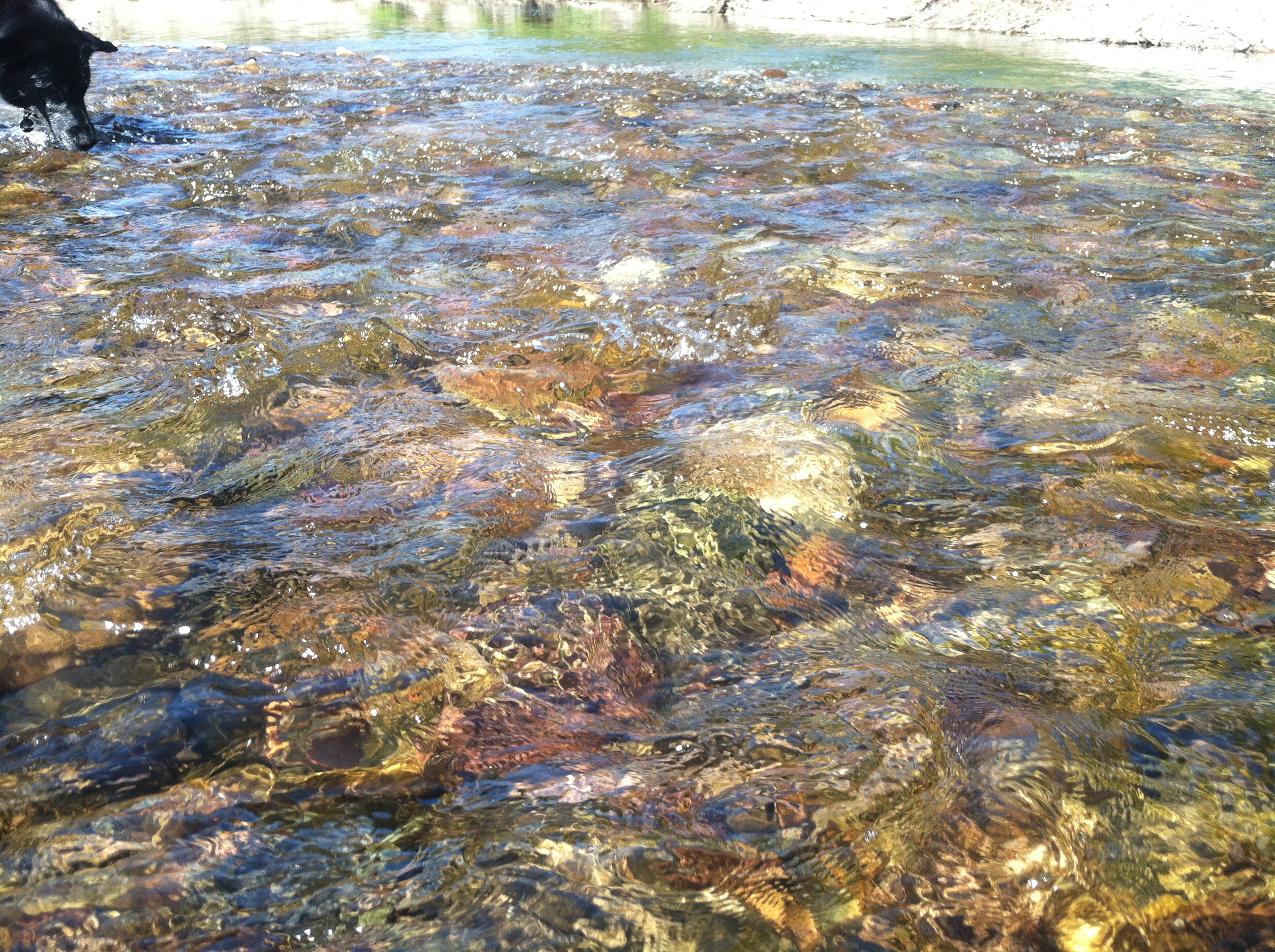
On Sunday I chose Council Groves, a place I hadn’t been to in a few years. Council Groves has good swimming, and it also has good history. It is a sad story, really. It’s where the Flathead, Kootenai, and Pend d’Oreille Indians signed a treaty in 1855 to give up their ancestral hunting groups in exchange for a reservation in the Flathead Valley. The Clark Fork flows through the state park with such force that every year the topography is a little bit different. There are deep swimming holes, shallow pools to lounge in, channels to follow, and little waterfalls over what I consider to be the most beautiful river rock anywhere.

There’s no hunting there these days, but there’s fishing, tadpole catching, and rock collecting. There are cottonwoods and old ponderosas to sit under when the sun becomes too much, and wild mint to discover. Tell me, what more do we need?

Image

Oasis.

Image

Free Rock Massage.

Image

Holding Beauty.

Image

Fishing/Rock Hunting Dog.

Image

Evidence that big water runs through it.Image

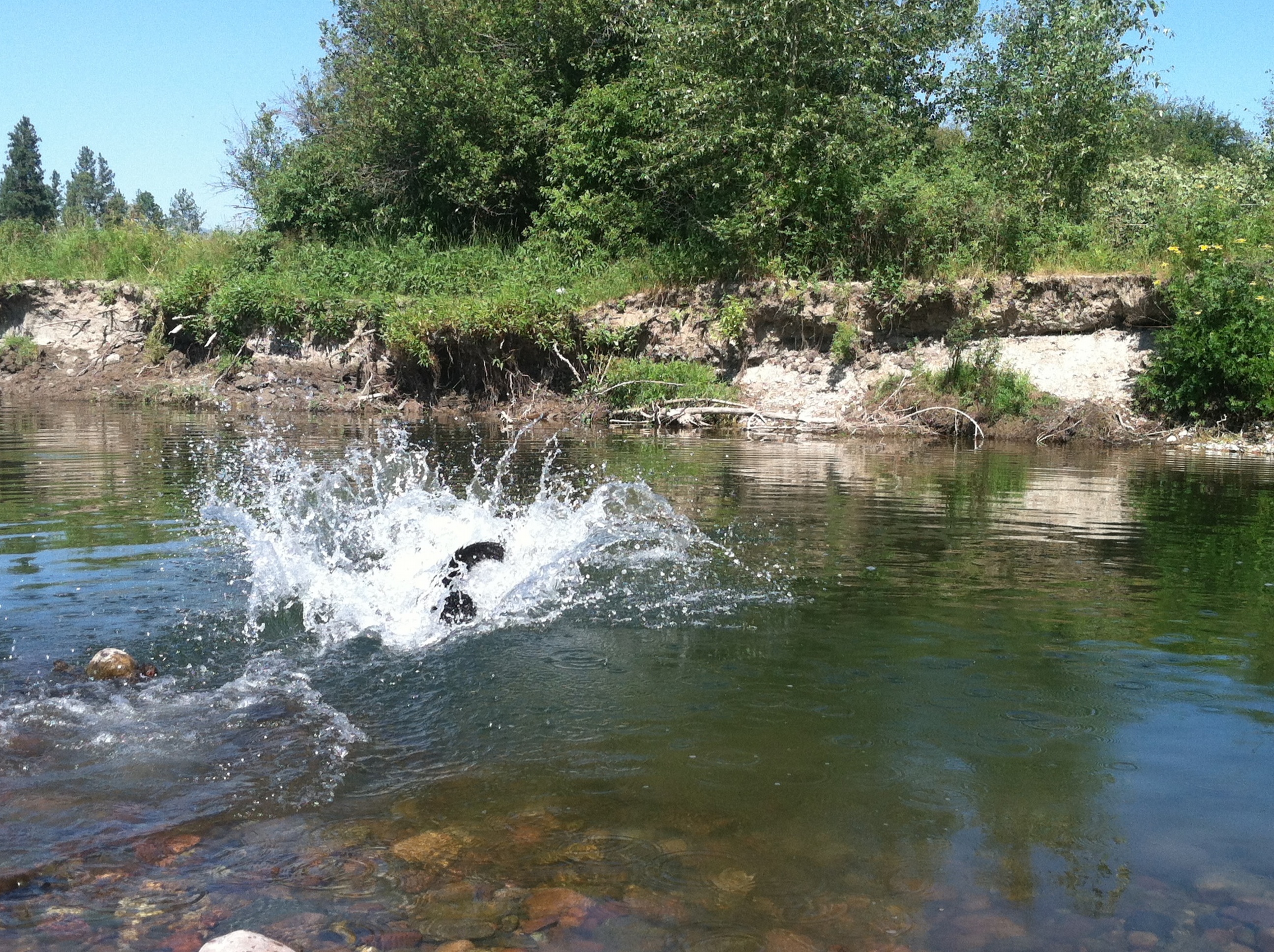
Splash!

Image

Despite it all this big tree stands.

City Love

I posted a few pictures yesterday on Facebook in an album titled “Missoula Marathon 2012.” That is what the event is called, but in addition to a full marathon there’s a half-marathon, a relay, a 5K, and a Kid’s run. A lot of my friends “liked” my album and the individual photos, and with each click I almost felt obligated to clarify: You know I “just” ran the half? Right?

But there’s something odd to me about the word “just.” Just is one of those words that has a wide range of meaning—everything from morally right to deserved to only.

In the case of my marathon it means “only” or “no more than” the half. Sort of like when people say “we’re just friends,” as if being more than friends would be better, when in fact sometimes it’s not. Or like when people say, “I’ll just have the bacon double cheeseburger, with fries, and might as well have onion rings,” then when asked if they want a drink say, “Okay, I’ll just have a diet coke.”

In a lot of cases “just” is quite a lot.

I ran the half-marathon in 2008, and in 2010 and 2011 my mother came out and we “just” walked it. After I ran the 2008 half-marathon I was with a friend who told his mother I’d just finished the half-marathon to which she replied: “What happened to the other half?” She was being funny, but for some reason it stuck with me. Is the other half necessary? Is it too much? Is it more than enough?

A lot of people run full marathons, sometimes multiple marathons in a year. Sometimes marathons on challenging terrain. Sometimes marathons with a live band at every mile. Sometimes marathon that hurt their bodies beyond repair.

Some people never run a full marathon; I am one of those people.

I’ve thought about it. I love running and its ability to reset me when my wiring goes haywire. I love that running requires so little and gives so much, and I will do it until my body tells me not too. I’ll do it when it’s too hot, too cold, too icy, too dark. That said, I’m not physically constructed “like a runner,” and definitely fall into the category of built for comfort and not for speed. I don’t think running a full marathon would serve me well, so I gratefully accept my ability to run just half.

Just half is a lot. It’s 13.1 miles, and in Missoula that is all on pavement. It starts at 6:00, which means a wake up time around 4:00. On July 8th the sun rose before 6:00 and there was light popping over the hills before that, but still…waking up that early is just not just. It feels downright inhumane to be awake at that hour wondering: have I eaten enough? Have I pooped? Have I hydrated? Have I completely lost my mind? {emphasis on that last one.}

But then you get downtown and start to feel the energy of the thousands of other runners taking school busses to the start. You’re glad you have a rack of ponytail holders on your wrist so you can give one to the woman who can’t believe she forgot. You see bodies that have trained and bodies that have not. You see runners, walkers, and hand-cyclers. You see wheelchairs. You see t-shirts announcing the runner is running in loving memory of someone. You think: maybe I haven’t lost it. You know: I can do this.

You hear the Star-Spangled Banner and you put your hand over your heart. You might tear up. You see the guys running in superhero underpants, the girls running in tutus. You smile. But the national anthem ends, the shot is fired, the fireworks go off, and so do you.

Afterward you’ll hear about the ten-year old who finished (just the half) and the woman who ran NOT just the half after sustaining a traumatic brain injury twelve years ago and had to learn to walk and then to run. You’re in awe.

I didn’t train for this event. I hadn’t run more than five miles since last fall and I was technically unprepared. The week before the marathon I googled “ running a half-marathon without training” but the results were inconclusive; I was going to have to find that answer within myself, and myself said, “YES!” Then it said, “maybe,” then it said, “yes” again. I caught myself on a yes and signed up less than twenty-four hours before the event. I made my decision they way I’ve made most of my decisions in life: would I rather try and fail then not try and not know?

trytrytry. yesyesyes. trytrytry. yesyesyes. trytrytry. yesyesyes. trytrytry. yesyesyes.

There were times I was propelled along by the energy of the runners all around me, but most of the time I was in my own little world. I enjoyed toggling back and forth between running with thousands of others runners and going within, telling myself I was “just going on a nice Sunday run across town, listening to music, enjoying the views.” The body is powerful, but the mind even more so.

I made myself a killer playlist that had about eight days worth of songs on it. Some of the songs I’ve loved in my past didn’t deliver the way I’d hoped, and some songs that I’d added on a hunch got me turning my legs over in ways I didn’t expect. House of Pain “Jump Around.” Gwen Stefani “The Sweet Escape.” Tiffany “I think we’re Alone Now.” Kid Rock “Bawitdaba.” Sugarland “Stuck on You.” Barry White “Can’t Get Enough.” Sublime, “Santeria.”

Wow, there really isn’t a lot of shame left in my game…

Because I went into the event “untrained” I told myself I could walk some if I needed to, but it turned out that if I ran at my own pace I didn’t need to. It took me two-and-a-half hours to finish, with my miles averaging out at 11:40. I almost felt guilty because at the end I had some juice to spare, but I stopped myself: why is it necessary to push ourselves to exhaustion or injury? Why can’t we just enjoy ourselves?

The Missoula Marathon has been rated among the best in the US, and was ranked #1 by Runner’s World in 2010. That’s great. It’s great for our community and for the runners who get to experience the improvements every year even as the event continues to grow. If the Missoula Marathon has growing pains they are not apparent; every year the efficiency improves but the hometown feel remains.

Formal and informal surveys alike continually name one thing as the factor that makes the Missoula Marathon so incredible. Everyone agrees that the scenery is lovely and the climate is dry and comfortable, but it’s the people that really make it special.

The marathon volunteers give us water, sort our bags, and cheer us on. My bus driver told every single person who got off to “have a good run.” Then there’s the man playing his grand piano on his lawn across from the Bitterroot River just after 6:00am. There’s the guy with the record player. There are the dozens of people who set up sprinklers in front of their houses, some rigged high on ladders so you can run through a shower. There are the people drinking coffee wrapped in blankets sitting on tailgates, the kids in pajamas, the mothers in robes. The dogs. There are the kids handing out otter pops (I got pink!) and the coolers of ice with signs to “help yourself.” There is so much cheering, so much support, so much city love.

I don’t live in Missoula for the skiing, the fishing, or the mountain biking: I live here (and love it) because of the people. Missoula people are so awesome. My close friends, my extended friends, the barista at the coffee shop, the stranger who changed my tire, the three-year old (also a “stranger”) who gave Lucky a tennis ball at the Big Dipper last night. I’ll say it again: Missoula people are so awesome.

Yeah, I guess it’s just the people.

Thanks, again, Missoula.

Image